

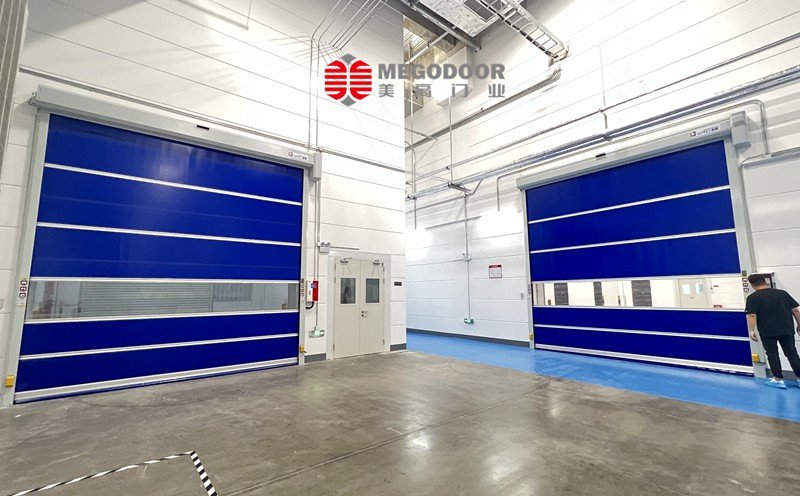
1. A Revolutionary Breakthrough in Industrial Door Control Systems
In modern industrial environments, doors are no longer merely physical barriers; they are critical nodes for optimizing production processes, managing energy, and ensuring safety. As a representative piece of equipment for the Industry 4.0 era, the high-speed rolling door has transcended its simple function as a passageway, becoming a strategic asset for enhancing corporate operational efficiency. From intelligent manufacturing plants in the Yangtze River Delta to cold chain logistics centers in the Guangdong-Hong Kong-Macao Greater Bay Area, high-speed rolling doors are redefining the standards for boundary management in industrial spaces with operating speeds of 0.6 to 2.5 meters per second. This article provides a comprehensive analysis of its technical characteristics and application methods, helping enterprises achieve a perfect balance of safety, efficiency, and energy conservation.
2. Core Performance Parameters: Surpassing the Limits of Traditional Door Control
2.1 The Perfect Combination of Speed and Efficiency
- Opening/Closing Performance: Adjustable operating speed of 0.6-2.5 m/s (typically completing a full cycle in 1-3 seconds).
- High-Frequency Use: Designed for 1 to 2 million opening/closing cycles.
- Recovery Time: After the door closes, the indoor-outdoor temperature differential returns to equilibrium in just 15-30 seconds (compared to 3-5 minutes for traditional doors).
- Efficiency Comparison: In a logistics channel with 300 daily passages, a high-speed rolling door reduces open time by approximately 2,400 minutes per year compared to a traditional door, significantly improving environmental stability.
2.2 Energy Management Expert
- Heat Exchange Blocking: High-quality PVC door curtains have a thermal conductivity coefficient ≤ 1.8 W/(m²·K), reducing energy loss by 65% compared to ordinary doors.
- Airtight Design: A side double-brush + bottom airbag sealing system ensures an air leakage rate < 0.5 L/(m²·s).
- Economic Benefits: In cold storage environments at -25°C, high-speed rolling doors can reduce refrigeration energy consumption by 30-45%, with a payback period typically of only 1.2 to 1.8 years.
2.3 Structural Strength and Adaptability
- Wind Resistance: Standard models can withstand wind speeds of 85 km/h (Beaufort Scale 10); special models reach 125 km/h (Beaufort Scale 11).
- Environmental Adaptability:
- Temperature Range: -35°C to +70°C.
- Humidity Adaptability: ≤ 95% RH, condensation-free.
- Corrosion Protection Level: C4 industrial environment (ISO 12944 standard).
- Impact Resistance Design: Can withstand an instantaneous impact force of 50 N·m, with a curtain tear strength ≥ 2500 N.
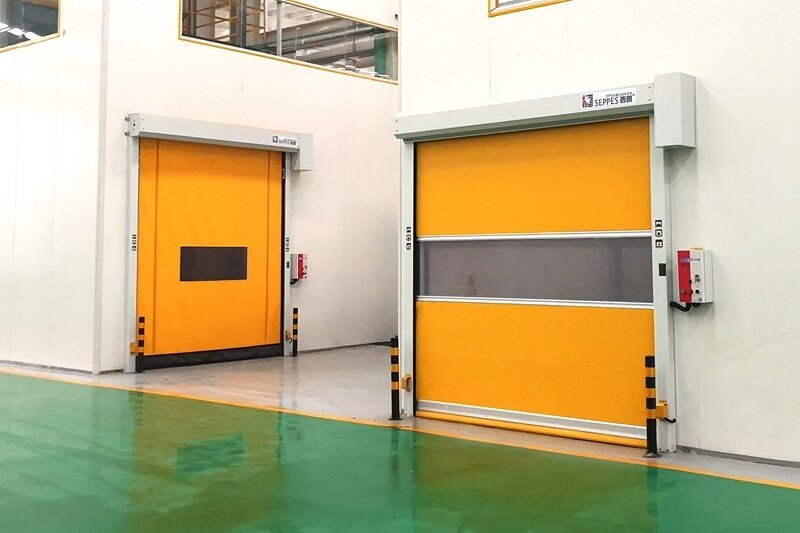
3. Intelligent Control System: Multi-Modal Operational Experience
3.1 Standard Control Methods
| Control Method | Application Scenario | Response Distance | Features |
|---|---|---|---|
| Button Control | Personnel Passageways | Manual Operation | Simple and reliable; preferred in emergencies. |
| Remote Control | Vehicle Passageways | 30-50m | Waterproof and dustproof; IP65 protection rating. |
| Infrared Induction | High-Frequency Passageways | 2-5m | 16-beam detection; strong anti-interference capability. |
| Ground Magnetic Induction | Vehicle Entry/Exit | 5cm above ground | Identifies metal objects; unaffected by weather. |
| Radar Detection | High-Speed Logistics | 8-12m | Millimeter-wave technology; precise identification of moving objects. |
3.2 Advanced Integration Functions
- Dual-Door Interlocking: Two doors open and close alternately to prevent air convection.
- Pressure Balance: Interlocks with cleanroom pressure systems to maintain stable pressure differentials.
- Remote Monitoring: Supports 4G/5G modules for real-time status monitoring and fault warnings.
- Energy Consumption Statistics: Records switch counts and operating times to generate energy reports.
4. Professional Installation and Full Lifecycle Maintenance
4.1 Installation Technical Specifications
- Opening Accuracy Requirements:
- Verticality error ≤ 1.5 mm/m.
- Levelness error ≤ 2 mm/m.
- Embedded part depth ≥ 100 mm.
- Track Installation:
- Guide rail parallelism error ≤ 1 mm.
- Door shaft levelness ≤ 0.5 mm/m.
- Fixed point spacing ≤ 600 mm.
4.2 Maintenance System
| Maintenance Frequency | Inspection Item | Standard Requirements | Tools/Methods |
|---|---|---|---|
| Daily | Door Operation Status | No abnormal vibration or noise. | Visual inspection; auditory judgment. |
| Weekly | Safety Device Test | Obstruction rebound sensitivity. | 10cm wooden block test. |
| Monthly | Track and Roller Cleaning | No dust or oil stains. | Special cleaning agent; soft cloth. |
| Quarterly | Motor and Transmission System | Temperature rise ≤ 40°C; no noise. | Infrared thermometer; stethoscope. |
| Annual | Comprehensive Performance Evaluation | Meets initial design parameters. | Professional testing equipment. |
4.3 Emergency Response Procedures
- Power Outage Emergency: Using the manual release device, the door can be lowered to a safe position within 30 seconds.
- Fault Isolation: Dual-circuit design ensures the safety system operates independently.
- Remote Diagnostics: Smart models support fault code displays with over 95% accuracy.
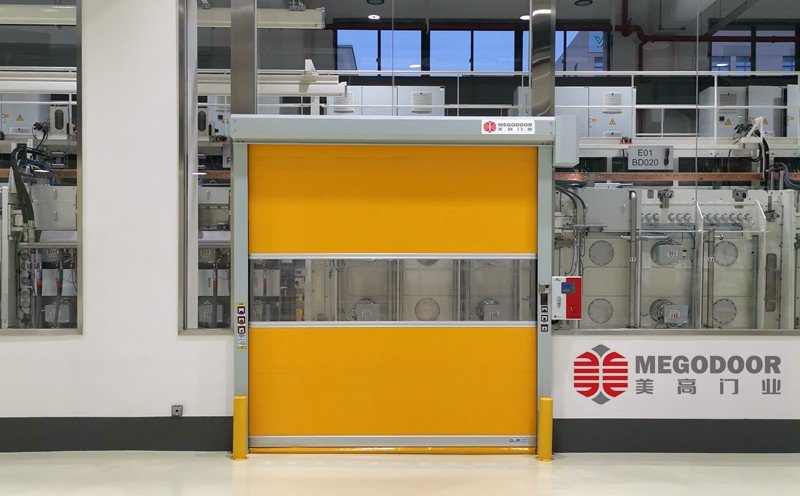
High-speed rolling doors have evolved from simple mechanical devices into intelligent industrial equipment integrating safety, efficiency, and energy conservation. When selecting equipment, enterprises should, based on actual operating conditions, choose suppliers with professional qualifications, technical strength, and comprehensive service systems. Investing in a high-quality high-speed rolling door system is not only an optimization of the production environment but also a strategic move for the long-term competitiveness of the enterprise. In the wave of Industry 4.0, let every high-speed rolling door become an intelligent gateway connecting efficiency and safety.